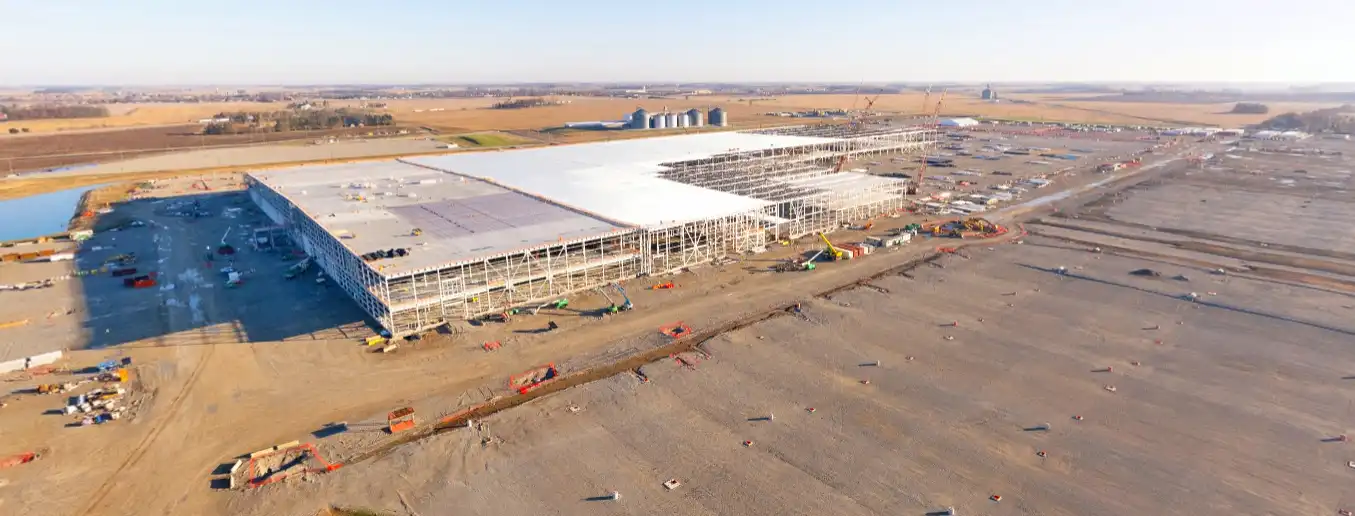
Reduce risk, protect capital, and keep complex projects moving from concept through completion.

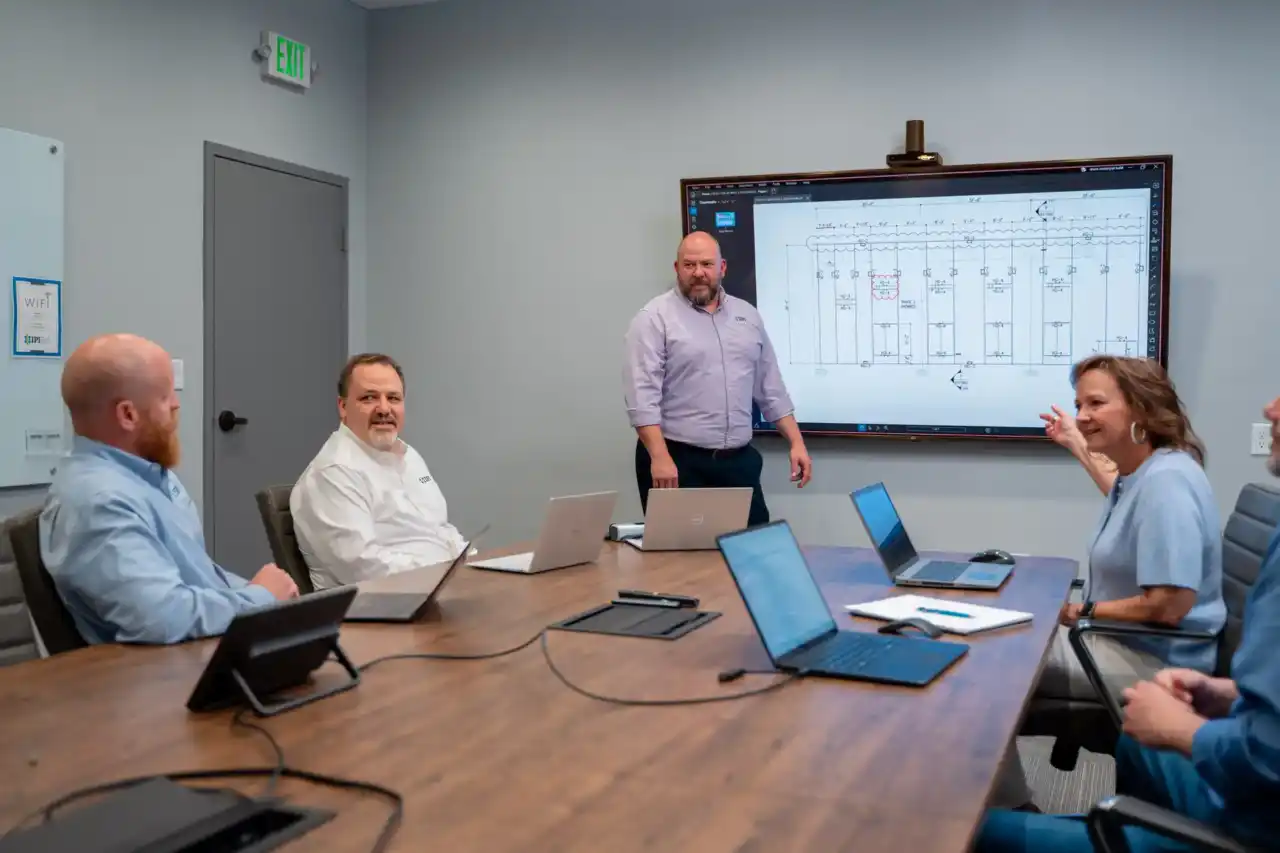
Industrial projects do not usually fail all at once. They fail gradually, through disconnected teams, late visibility, unclear accountability, and handoffs that drop more than they pass.
One Team That’s Integrated from the Start
IPI is not a vendor managing a scope of work. We function as an extension of your organization, integrating planning, controls, construction, safety, and operations so nothing falls between teams.
When the pressure builds, that integration is what keeps the project from getting away from you.
Our Safe. Clean. Organized.™ operating standard runs through every engagement, not just our safety programs.
OUR CORE VALUES
From Concept Through Operations
Every phase is connected.
Every discipline is accountable.
IPI (Industrial Project Innovation) is an industrial owner’s representative and project delivery firm serving owners in manufacturing, energy, automotive, aerospace, and mission-critical environments across the full project lifecycle, from early planning through operations.
PHASE 1
Site analysis, permitting, initial budget and schedule development, government relations and incentive negotiations.
PHASE 2
Execution planning, design development, risk strategy, contracting approach, contractor and supplier evaluation.
PHASE 3
Detailed design, procurement implementation, site mobilization, operations and maintenance planning.
PHASE 4
Construction management across safety, cost, schedule, quality, risk, and reporting, field coordination and contractor oversight.
PHASE 5
Commissioning and turnover, production setup, owner training, operational handoff.
Owners carry the full weight of coordinating contractors, managing schedules, tracking costs, and holding vendors accountable while also running their core business. Something gives. Usually the project.
IPI serves as the owner’s representative and delivery leader across the full project lifecycle. We align scope, schedule, budget, and field execution around a shared plan and hold every stakeholder accountable to it. From pre-construction through closeout, we keep the project moving and the owner informed.
A project that stays aligned to your business objectives without pulling your internal team away from operations to manage it.
An owner’s representative manages the project on the owner’s behalf, coordinating contractors, tracking cost and schedule, managing risk, and making sure every phase stays aligned with the owner’s business objectives. The goal is full project visibility and accountability without requiring the owner’s internal team to absorb the entire management burden.
Projects enter execution carrying assumptions that were never tested. Scope gets locked before the right questions were asked. Budget gets committed before risk was mapped. The project starts moving before it has a buildable path, and corrections cost far more than early alignment would have.
IPI works with owners at the front end to turn unclear goals into a defined, executable plan. That means surfacing risk early, aligning stakeholders, stress-testing assumptions, and building a project framework that holds under real execution pressure.
A project that enters construction with a clear scope, a realistic budget, a tested schedule, and a leadership structure that knows what it is responsible for.
The most effective risk reduction happens before execution begins. That means defining scope clearly, pressure-testing budget assumptions, identifying and mapping risk early, and aligning all stakeholders around a shared project framework before money and time get locked into the wrong path.
Cost drift, schedule slip, and scope creep rarely arrive as emergencies. They arrive as small decisions made without full visibility. By the time leadership sees the problem, the correction costs more than the original issue would have.
IPI establishes cost, schedule, risk, change, and reporting controls that keep the full project picture visible to the people who need to act on it. This is not more reporting. It is shared visibility that enables better decisions sooner, before small gaps become expensive problems.
Early warning instead of late surprises. A project that stays in control because the right people are seeing the right information at the right time.
Project controls are the systems and processes that track cost, schedule, risk, and change across a capital project. When controls are working, project leadership sees problems early enough to act on them. When they are missing or inconsistent, small gaps compound into budget exposure and schedule loss before anyone in leadership knows there is a problem.
Engineering hands off to construction. Construction hands off to operations. At every transition, something gets lost. Vendors work from different versions of the plan. Field teams make assumptions that contradict the design. The project fractures between teams, and nobody owns the gap.
IPI connects engineering, construction, operations, vendors, and field execution around a shared understanding of the project. That alignment is built early and sustained through every phase, not assembled after the damage is already visible.
A project that moves through transitions without losing momentum, accuracy, or accountability.
Handoffs fail when the two teams were never aligned around the same plan to begin with. Construction optimizes for schedule and budget. Operations optimizes for how the facility actually needs to run. When those priorities are not integrated early, the gap shows up at turnover, and the cost of closing it lands on operations.
Vendor selection becomes reactive. Contracts get awarded without the right controls in place. Scope gaps and misaligned expectations surface in the field, where fixing them costs time, money, and trust.
IPI supports procurement strategy, vendor qualification, bid management, and contract structure to make sure the right partners are engaged under the right terms before work begins. We align procurement to the project plan, not around it.
A vendor and contractor network that is accountable to the project from day one, with fewer surprises downstream.
Construction procurement management is the process of identifying, qualifying, and contracting the right vendors and contractors for a capital project. When procurement is aligned to the project plan, scope gaps and contract misalignments get resolved before they reach the field. When it is reactive, those gaps show up as change orders, delays, and cost exposure.
When safety is treated as a compliance layer added on top of project delivery, it gets compressed when schedules tighten. The result is field pressure that outpaces safety discipline, and standards that exist on paper but not in practice.
IPI embeds safety into project delivery from the start. Safety planning, field oversight, and accountability structures are part of the project framework, not a parallel workstream that competes with execution.
A project where safety does not get traded against schedule. Where the field is operating from the same standards leadership approved, through every phase.
Effective safety management on industrial projects requires more than a safety plan in a binder. It requires safety to be embedded in the project delivery structure from the beginning, with field oversight, clear accountability, and standards that hold under schedule pressure. When safety is bolted on rather than built in, it is always the first thing that gets compressed.
The cost of project leadership shows up clearly on a budget line. The cost of poor coordination rarely does, until the project is already behind, over budget, or operationally painful.
By reducing waste, avoiding rework, improving coordination, and surfacing risk earlier, disciplined project leadership typically returns more than it costs. That is the expectation we hold ourselves to on every engagement.
IPI's standard is to create more value than the cost of our involvement.
IPI engages as the owner’s representative, functioning as an extension of your internal team. Engagements are structured around the scope and phase of the project, from early planning support through full project delivery.
IPI works across a range of capital project scales in manufacturing, energy, automotive, aerospace, and mission-critical environments. The right fit depends on project complexity as much as project size.
The earlier the better. The highest value IPI creates is typically in the planning and framing phase, before assumptions get locked into the budget and schedule. That said, IPI can step into projects mid-stream when owners need stronger controls or delivery leadership.
IPI contracts directly with owners as their representative and delivery leader. In most engagements, that relationship is straightforward: IPI holds the owner contract and manages contractors on the owner’s behalf. In select cases, where an owner requires it, IPI can also hold contractor contracts and run project execution through its own books. Either way, IPI’s accountability runs to the owner’s objectives, not to a contractor’s scope.